startups

Selling into education: the 15 minutes that lost the deal
Sales Enablement

Selling into education: the fifteen minutes that lost the deal

Sales Enablement Selling into Education: the Fifteen Minutes That Lost the Deal I went looking for this one. I asked to be sold to, I turned up wanting to buy, and he still managed to lose me before the coffee had gone cold. SJ Stella James · 21 September 2026 · 5 min read I was on the wrong end of a sales call this week. Wrong end, because I was the buyer, and because I was the one who went looking for it in the first place. Somebody recommended the company to me. I had a look at what they do, thought there might be something in it for us, and I reached out. So the man on the other end of that call had a warm buyer on a plate, asking to be sold to, having already decided she was interested enough to give up half an hour of a Tuesday. First thing he said was that he’d had a look at us and reckoned he’d got the gist. He hadn’t got the gist. The only thing he actually knew about me was that I work in education, which is roughly as useful as knowing that somebody lives in Europe. Then he talked. For fifteen minutes. I stopped him in the end, which I don’t love doing, and said look, I’m sorry, but everything you’re describing I’m already doing. And I was a bit cross about it, because one question would have told him that, and instead he spent a quarter of an hour selling me my own life back. He had a warm buyer, on a plate, asking to be sold to. He lost me in fifteen minutes, and he’ll probably write it up as a budget problem. Where the pitch actually belongs Most people are taught to hold the pitch as a thing. A separate object, rehearsed, with a beginning and an end, that gets deployed once the pleasantries are out of the way. Discovery becomes the bit you get through so you can start. Here’s the bit that keeps getting missed. The pitch is supposed to run alongside the questions and get built out of what they tell you. Done properly, the whole thing doesn’t feel like a sales call at all. It feels like a conversation, which is, rather, the point. That matters everywhere, and it matters more when you’re selling into education, because the word “school” hides an enormous amount. A head of a single primary with a hundred and eighty children on roll and a central team running twenty-eight academies have almost nothing in common as buyers. Different money, different timelines, different people who can say yes, different reasons to care. A pitch built before the call can’t possibly be right for both, so it gets written for neither. You get about five minutes Five minutes at the start to make somebody want to keep talking to you. That’s the whole budget. Spend it describing your product and you’ve spent it, and everything after that is a polite person waiting for a gap. They won’t tell you. Nobody in education tells a supplier they lost them at minute six. They say it’s interesting, they say they’ll take it to the team, they ask you to send something over, and then the something over sits in an inbox next to four hundred other somethings over. You log it as a maybe. It was a no, and it became a no while you were still talking. What research actually means Research is the least glamorous part of the job, which is exactly why it gets skipped, and everyone skips it in the same way: a quick look at the website, a scroll of somebody’s profile, done. That isn’t research. That’s reassurance. Before you get on the call, you want honest answers to five things. What kind of organisation is this really, and who holds the money. What have they already bought that does some of what you do, because something will. What have they said in public about this year’s priorities, which is usually sitting in a development plan, a newsletter or a governors’ document that nobody outside the school ever reads. Who is on the call, and what does their year look like from where they’re sitting. And finally, the one thing you genuinely don’t know and want to ask them, out loud, early. Job adverts are the honest ones, incidentally. A school will tell a careers page what it’s struggling with far more plainly than it will ever tell a supplier. If you haven’t done the research before you call, you’ve already spent the five minutes. The genuinely hard bit None of this is difficult to understand. It’s difficult to do, and it’s difficult for one very human reason: you can feel the pitch in your mouth. They say something that connects to slide four and everything in you wants to get to slide four. Holding that, asking a second question instead, letting them finish a sentence you could have finished for them, is the actual skill. It’s also the thing no amount of product training gives you. I’ve spent a lot of this year listening to recorded calls while training teams, and the pattern is always earlier than people expect. Not the objection handling. Not the close. The first five minutes, and what was or wasn’t done the night before. The course for the five minutes before the pitch Four steps, all of them boringly practical: strategic discovery, concept introduction, collaborative exploration, solution alignment. Built for sales and business development teams working with schools, trusts and colleges. Education Market Sales Mastery is £497, or £422.45 for BESA members. Would rather talk it through? Book a call. Which brings me back to my man and his fifteen minutes. He had the thing the rest of the sector would take an arm for. Inbound. A buyer who reached out, who wanted to be sold to, who had already talked herself into the
Why your case studies aren't converting — sales enablement blog by Seventh Sibling"
Business Development, Sales Enablement

Why Your Case Studies Aren’t Converting

Why Your Case Studies Aren’t Converting (And How to Fix Them) | Seventh Sibling *, *::before, *::after { box-sizing: border-box; margin: 0; padding: 0; } :root { –navy: #0F1B2D; –coral: #D97088; –green: #3B8B4E; –cream: #F0EDE8; –beige: #EDE5DB; –text: #1a1a2e; –muted: #6b7280; } body { font-family: ‘Lato’, sans-serif; background: var(–cream); color: var(–text); line-height: 1.8; } .blog-header { background: var(–navy); padding: 60px 24px 50px; text-align: center; } .blog-category { display: inline-block; font-family: ‘Montserrat’, sans-serif; font-size: 11px; font-weight: 700; letter-spacing: 3px; text-transform: uppercase; color: var(–coral); margin-bottom: 20px; } .blog-header h1 { font-family: ‘Montserrat’, sans-serif; font-size: clamp(28px, 5vw, 48px); font-weight: 800; color: #fff; line-height: 1.2; max-width: 760px; margin: 0 auto 20px; } .blog-meta { font-family: ‘Lato’, sans-serif; font-size: 14px; color: rgba(255,255,255,0.5); letter-spacing: 0.5px; } .accent-bar { height: 5px; background: linear-gradient(90deg, var(–coral) 0%, var(–green) 100%); } article { max-width: 720px; margin: 0 auto; padding: 60px 24px 80px; } article p { font-size: 17px; line-height: 1.85; margin-bottom: 24px; color: #2a2a3e; } article p strong { color: var(–navy); font-weight: 700; } h2 { font-family: ‘Montserrat’, sans-serif; font-size: 22px; font-weight: 800; color: var(–navy); margin: 48px 0 16px; line-height: 1.3; } .lead-paragraph { font-size: 19px; font-weight: 300; color: var(–navy); border-left: 4px solid var(–coral); padding-left: 20px; margin-bottom: 36px; line-height: 1.7; } .pullquote { font-family: ‘Montserrat’, sans-serif; font-size: 20px; font-weight: 700; color: var(–coral); text-align: center; padding: 40px 30px; margin: 40px 0; border-top: 2px solid var(–beige); border-bottom: 2px solid var(–beige); line-height: 1.5; } .section-divider { width: 60px; height: 3px; background: var(–green); margin: 48px auto; border: none; } .blog-footer { max-width: 720px; margin: 0 auto; padding: 0 24px 80px; border-top: 2px solid var(–beige); padding-top: 32px; } .blog-footer p { font-size: 15px; line-height: 1.7; color: var(–muted); } .blog-footer a { color: var(–coral); text-decoration: none; font-weight: 600; } .blog-footer a:hover { text-decoration: underline; } @media (max-width: 600px) { .blog-header { padding: 40px 16px 36px; } article { padding: 40px 16px 60px; } .pullquote { font-size: 18px; padding: 30px 16px; } } Sales Enablement Why Your Case Studies Aren’t Converting (And How to Fix Them) Stella James  |  May 2026  |  6 min read You’ve got the case study. The school said nice things. Marketing made it look beautiful. It’s on the website. It’s in the pitch deck. And it’s doing absolutely nothing. I see this constantly. Companies selling into education with five, ten, sometimes twenty case studies — and none of them are moving deals forward. They exist because someone somewhere decided “we need case studies” and ticked the box. But nobody stopped to ask what the case study was actually supposed to do. Here’s the uncomfortable truth: most case studies in education sales are testimonials wearing a longer jacket. And testimonials don’t close deals. The wrong person problem The biggest mistake I see is case studies written for the person who already said yes. Think about it. You go back to the school that loves you. You ask them to say how great you are. They do — because they are lovely people and they genuinely like your product. You write it up, add a photo of some happy children, and put it on the website. Who is that for? It’s not for the head teacher at the school down the road who has never heard of you. It’s not for the MAT finance lead who needs to justify spending. It’s not for the procurement officer comparing you against three other providers. It’s for you. It makes you feel good. And it sits on a page that nobody who matters is reading. This is a stakeholder mapping problem. If you’ve done your homework on a deal — if you know who the decision makers are, who the influencers are, who holds the budget and who holds the veto — then you already know that a single case study cannot speak to all of them at once. The head teacher needs to see classroom impact. The finance lead needs to see value. The trust CEO needs to see strategic alignment. Send the same document to all three and you’ve impressed none of them. A case study that converts is written for a specific person who hasn’t bought yet. It speaks to their problem, not your product. It shows someone in their role dealing with something they recognise. That’s a completely different document from the one most companies are producing. The timing problem Case studies get sent at the wrong moment. Usually too early. Someone has had one conversation with you. They’re vaguely interested. You send them three case studies, a one-pager, and a link to a webinar recording. Congratulations — you’ve just made their inbox feel like homework. A case study lands when the buyer is past curiosity and into justification. They already think what you’re offering might work. Now they need evidence to take to someone else. That’s the moment. Not before. If you’re sending case studies before a second conversation, you’re not selling — you’re hoping. And hope is not a strategy. A case study that converts names a problem the reader already has, shows measurable impact from someone like them, and makes the next step obvious. What most case studies actually say I’ve read hundreds of these. Most of them follow the same structure: here’s the school, here’s what they bought, here’s how much they liked it. Three paragraphs of context nobody asked for, a couple of quotes that could apply to any product in any sector, and a call to action that says “book a demo.” None of that is useful to the person reading it. They don’t care about the school’s name. They care about whether the school had the same problem they have. They don’t care that the head teacher said something nice. They care about impact. What actually changed? For whom? By how much? The most common line I see in education case studies is some version of “it’s been a game changer for our school.” That tells me nothing. What changed? Over what time period? What does the data say? If you can’t answer those questions,

Build a complete, education-specific commercial engine – from positioning and pricing to discovery, concept-led business development, stakeholder navigation and measurement. This is the full playbook for EdTech founders and commercial leaders who want sustainable growth in education markets. You’ll learn how to: Position your product for schools, MATs and education organisations Design an education-specific business development strategy Run strategic discovery and concept-led conversations Navigate complex stakeholder groups and decision-making in education Measure what matters and build a pipeline that actually converts Best for: EdTech founders, CEOs and commercial leaders who want an end-
Business Development

Announcing CPD Accreditation for B2Education Mastery: Elevating EdTech Sales Training

Big news: B2Education Mastery: The Complete EdTech Business Development Guide is now CPD accredited (January 2026). If you’ve ever tried selling into schools or MATs and thought, “Why is this so hard?”, you’re not imagining it. Education isn’t just B2B with nicer people. It’s complex, high-stakes, and full of stakeholders who all care about different things — and rightly so. This accreditation matters because it’s an independent mark that the course meets recognised CPD standards and delivers practical learning you can actually apply. Why CPD Accreditation Matters Continuing Professional Development (CPD) accreditation is a trusted mark of quality and relevance. It assures learners and organisations that the training meets rigorous standards and delivers practical, applicable knowledge. For EdTech companies, sales is often the most overlooked skill. Many teams assume sales is a natural talent rather than a professional discipline. Our course challenges that misconception by providing sector-specific training tailored to the unique challenges and stakeholders in education. Sign up today Why CPD Accreditation matters (especially for sales) Sales capability is often the most overlooked part of an EdTech business. Too many teams assume sales is a personality trait — something you either have or you don’t. In reality, sales is a professional skill. In education, it’s a specialist one. When it’s done well, it builds trust, sets expectations properly, and makes implementation smoother. When it’s done badly… customer success ends up with the mop and bucket. What you’ll learn in B2Education Mastery This is a self-paced online course built specifically for selling into education. Inside you’ll get: 15 comprehensive lessons covering concept selling, stakeholder mapping, procurement navigation, and more. Practical frameworks and downloadable toolkits designed specifically for the education sector. Self-paced online delivery with engaging AI-generated video lessons. Embedded quizzes and assessments to reinforce learning. CPD certification that learners can showcase to demonstrate their professional growth. Who it’s for EdTech founders, commercial leads, sales teams, and anyone who’s been “volunteered” into selling in education and wants a repeatable, ethical way to do it. Ready to get started? If you want to build a proper education-specific commercial engine — without the fluff — you can enrol here: Enrol to B2Education Mastery

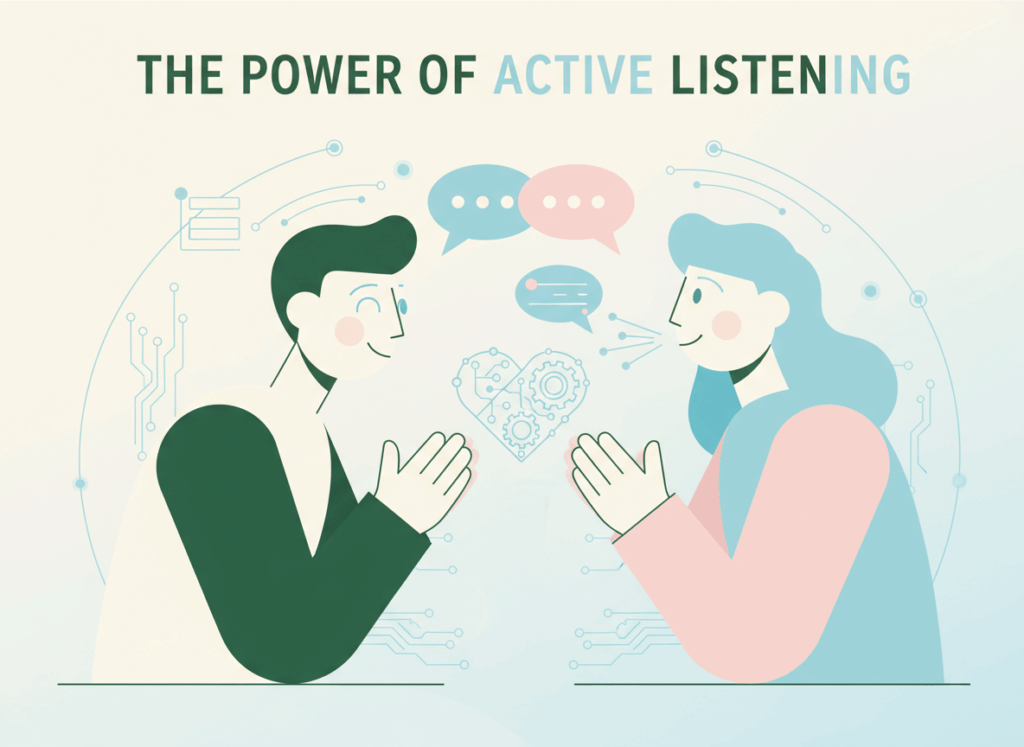
Professional illustration showing two business professionals in meaningful conversation, depicting active listening and genuine engagement in a sales meeting, using Seventh Sibling brand colours of deep green, light blue, cream and soft pink
Business Development, Customer Retention, Sales Enablement, Start-Up

The Power of Active Listening: Why Slowing Down Builds Stronger EdTech Relationships

You’re ten minutes into a discovery call. You’ve got your agenda ready, questions prepared, and a clear plan to move the conversation forward.
But your prospect is chatting away—about their school, their challenges, their weekend, their team dynamics. You can feel the clock ticking. Your instinct is to gently steer them back on track.

The Power of Selling the Concept, Not Just the Business
Business Development, Sales Enablement, Start-Up

The Power of Selling the Concept, Not Just the Business

In the ever-changing landscape of entrepreneurship, the emphasis often falls on selling the business itself. However, true success lies in selling the concept behind the business. This approach not only attracts investors but also builds a loyal customer base and fosters long-term growth Why Concept MattersVision and Purpose: A business concept encapsulates the vision and purpose behind the enterprise. It tells the story of why the business exists and what problems it aims to solve. This narrative is compelling and resonates with stakeholders on a deeper level than mere financial metrics. Differentiation: In a crowded market, a unique concept sets a business apart from its competitors. It highlights the innovative aspects and the unique value proposition that the business brings to the table. This differentiation is crucial for standing out and gaining a competitive edge. Emotional Connection: People connect with stories and ideas more than they do with numbers. Selling the concept creates an emotional bond with customers, investors, and partners. This connection fosters loyalty and advocacy, which are invaluable for sustainable growth. Flexibility and Adaptability: A strong concept provides a foundation that can evolve with changing market conditions. It allows the business to pivot and adapt while staying true to its core values and mission. This flexibility is essential for long-term resilience. How to Sell the Concept Craft a Compelling Narrative: Develop a clear and engaging story that communicates the vision, mission, and values of the business. Highlight the problem being solved and the impact the business aims to make. Showcase the Value Proposition: Clearly articulate the unique benefits and advantages of the concept. Use real-world examples and case studies to demonstrate its effectiveness and potential. Engage with Stakeholders: Build relationships with customers, investors, and partners by sharing the concept and inviting feedback. Use various platforms, such as social media, blogs, and presentations, to communicate the concept consistently. Focus on Impact: Emphasise the positive impact the concept has on the target audience and the broader community. Highlight success stories and testimonials that showcase the real-world benefits of the concept. Be Authentic: Authenticity is key to building trust. Ensure that the concept aligns with the business’s actions and practices. Consistency between words and actions reinforces credibility and trustworthiness. Conclusion Selling the concept, rather than just the business, is a powerful strategy for achieving long-term success. It creates a strong foundation built on vision, differentiation, emotional connection, and adaptability. By focusing on the concept, businesses can attract the right stakeholders, foster loyalty, and navigate the ever-changing market landscape with confidence. What are your thoughts on this approach? Have you seen any examples where selling the concept made a significant difference?

Scroll to Top
EdTech Founders Growth Playbook

EdTech Founders Growth Playbook