
sales training

edtech-customer-retention-blog.jpg
Customer Retention

Why Winning New Customers Whilst Losing Existing Ones Is Killing Your Growth

You’re celebrating. You’ve just closed three new schools this month. Your pipeline is healthy. Revenue is growing. Then renewal season arrives. Two schools don’t renew. One downgrades. Suddenly, your “growth” evaporates. Welcome to the leaky bucket problem. You’re pouring water in the top whilst it drains out the bottom. No matter how hard you sell, you can’t grow sustainably if you can’t retain customers. Customer retention isn’t just important—it’s the foundation of profitable growth. The Retention Economics Here’s the maths that most EdTech founders ignore: Acquiring a new customer costs five to seven times more than retaining an existing one. If your customer acquisition cost is £5,000 and your annual contract value is £10,000, you don’t break even until year two. Lose that customer after year one? You’ve lost money. Retain them for three years? You’ve tripled your return. Retention isn’t a “nice to have”—it’s the difference between profit and loss. Yet most EdTech companies spend 90% of their energy on acquisition and 10% on retention. That ratio should be reversed. Why Schools Don’t Renew Understanding why customers leave is the first step to keeping them: Reason 1: They Never Achieved ValueThey bought your solution but never fully implemented it. Teachers didn’t adopt it. Usage remained low. They couldn’t justify the cost for another year. Reason 2: Their Champion LeftThe head teacher who championed your solution moved to another school. The new leadership doesn’t understand the value and sees it as an easy budget cut. Reason 3: Budget ConstraintsSchool budgets tightened. They’re cutting everything non-essential. If you haven’t proven essential value, you’re vulnerable. Reason 4: Better Alternative EmergedA competitor launched a more compelling solution. Or their MIS provider added similar functionality for free. You’ve been displaced. Reason 5: Poor Customer ExperienceSupport was slow. Bugs weren’t fixed. Promised features never arrived. They’re frustrated and ready to leave. Most churn is preventable. But only if you’re proactive. Enrol now for free: Self-Paced Course The Customer Retention Framework Retention starts the moment a customer signs, not when their renewal is due: Phase 1: Onboarding (Days 1-90)This is your most critical window. Get them to value quickly. Provide structured onboarding with clear milestones. Ensure that teachers are trained and using the platform effectively. Celebrate early wins. Customers who achieve value in the first 90 days rarely churn. Phase 2: Adoption (Months 3-6)Monitor usage closely. Identify schools with declining engagement. Intervene proactively with training, best practices, or success stories. Don’t wait for them to ask for help—offer it before they need it. Phase 3: Value Realisation (Months 6-9)Help them quantify the impact. Provide reports showing time saved, outcomes improved, or costs reduced. Make the value visible and shareable with governors and senior leadership. Phase 4: Renewal Preparation (Months 9-12)Start renewal conversations 90 days before the contract ends. Please don’t wait until they’ve already decided not to renew. Conduct quarterly business reviews. Discuss expansion opportunities. Make renewal a natural progression, not a negotiation. The Early Warning System Build a customer health score that predicts churn risk: When any metric declines significantly, trigger an intervention. Don’t wait for the renewal conversation to discover they’re unhappy. The Retention Playbook Create specific interventions for common churn risks: Low Usage Alert: Proactive outreach offering additional training, best practice sessions, or success stories from similar schools.Champion Departure: Immediately engage new leadership, re-establish value, and provide transition support.Budget Pressure: Quantify ROI, offer flexible payment terms, demonstrate cost savings versus alternatives.Competitive Threat: Conduct feature comparison, highlight unique differentiators, and share customer success stories.Support Issues: Escalate to senior leadership, provide dedicated support, and implement fixes with clear timelines. Don’t treat every at-risk customer the same. Tailor your response to their specific situation. The Expansion Opportunity The best retention strategy is making your solution more valuable over time: Customers who expand their usage tend to stay with the company. They’re more invested, more dependent, and more satisfied. The Renewal Conversation Don’t make renewal transactional. Make it strategic: “Over the past year, you’ve saved approximately 300 teacher hours, improved reading levels for 85% of targeted pupils, and received positive feedback from 90% of staff. Looking ahead, what additional outcomes would you like to achieve? How can we support your strategic priorities for next year?” This positions renewal as continuing a successful partnership, not just signing another contract. Measuring Retention Success Track these metrics monthly: If your net retention rate is below 100%, you’re shrinking. Above 110%? You’re growing from existing customers alone—the foundation of sustainable growth. Stop the Leak Before Pouring More In You can’t grow your way out of a retention problem. Fix the leak first, then focus on filling the bucket. The best EdTech companies grow primarily from existing customers—through renewals, expansions, and referrals. New customer acquisition accelerates growth, but retention sustains it. Ready to build a customer retention programme that drives sustainable growth? Join the free EdTech Founder’s Growth Playbook course for the complete Customer Retention Framework, including health score models, intervention playbooks, and renewal conversation guides. Enrol now for free: Self-Paced Course In EdTech, retaining customers is more profitable than finding new ones. About the Author: Stella is the founder of Seventh Sibling and has over 20 years of experience in EdTech sales, business development, and leadership. She’s helped EdTech companies achieve £2.2m profit turnarounds, 41% YoY revenue growth, and has won six innovation awards for her work in the education sector.  

Business Development
Business Development, Sales Enablement

Unlocking Business Potential: Comprehensive Business Development Services

Unlocking Business Potential: Comprehensive Business Development Services In the dynamic world of business, growth and development are paramount. At Seventh Sibling, we understand the intricacies of business development and offer a full suite of services designed to help your business thrive. Whether you need coaching or direct support, our expertise spans all areas, including sales, marketing, partnerships, and customer retention. The Distinction Between Business Development and Sales Sales and business development are often used interchangeably, but they serve different purposes. Sales focuses on closing deals and converting prospects into paying customers through direct engagement. Business development, however, encompasses a broader scope, including identifying new market opportunities, building strategic partnerships, and fostering long-term growth. Sales Development: Coaching and Direct Support Sales are the lifeblood of any business. At Seventh Sibling, we offer comprehensive sales development services to ensure your team is equipped with the skills and techniques needed to close deals effectively. Our sales coaching programmes are tailored to your team’s needs, providing them with the tools to succeed. Additionally, our direct sales support can assist with sales operations, from developing strategies to engaging with prospects. Marketing Strategies: Building Your Brand Effective marketing is crucial for attracting and retaining customers. Our marketing strategies are designed to create a strong, memorable brand that resonates with your target audience. We utilise a mix of digital and traditional marketing techniques to maximise your reach and impact. From SEO and social media marketing to print and events, we ensure your marketing efforts are cohesive and effective. Partnership Development: Strategic Alliances Building strategic partnerships is a key component of business development. At Seventh Sibling, we help you identify and build partnerships that align with your business goals. Whether it’s exploring joint ventures or collaboration opportunities, our partnership development services are designed to drive mutual growth and success. Customer Retention: Keeping Your Clients Engaged Retaining customers is just as important as acquiring new ones. Our customer retention strategies focus on developing and implementing plans to keep your clients engaged and loyal. We gather and analyse customer feedback to continuously improve your products and services, ensuring long-term satisfaction and retention. Why Choose Seventh Sibling? With over 10 years of experience in helping businesses grow and succeed, Seventh Sibling offers comprehensive support tailored to your unique needs. Our proven track record of delivering tangible results speaks for itself. From sales to customer retention, we cover all aspects of business development, providing you with the tools and strategies needed to achieve your growth objectives. Get in Touch Ready to take your business to the next level? Contact us today to learn more about how Seventh Sibling can support your business development needs. Whether you need coaching or direct support, we are here to help you achieve your growth objectives. Let’s Work Together At Seventh Sibling, we are committed to helping you unlock your business potential. Let’s work together to build a successful future for your business. Reach out to us today and discover how our comprehensive business development services can drive your success.

Building rapour - Seventh Sibling
Sales Enablement

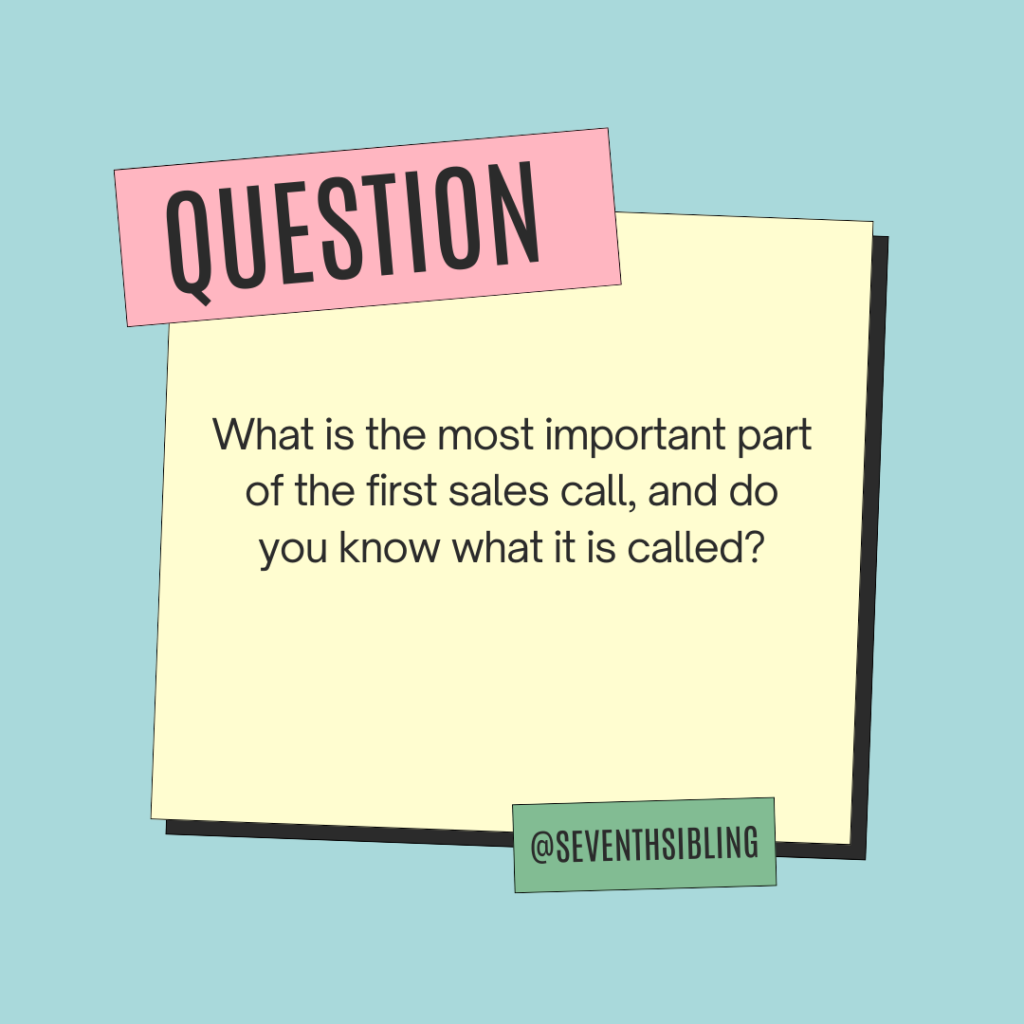
The most important part of the first sales call is often referred to as the intro or opening

  This initial phase sets the tone for the entire conversation and is crucial for establishing rapport, capturing the prospect’s interest, and building trust. During the intro, it’s important to be clear, concise, and engaging. Your tone and energy can significantly impact how the prospect perceives you and your offering Do you have any specific strategies you use during your sales call intros? Building rapport is crucial in sales for several reasons: Which aspect of building rapport do you find most challenging in your sales interactions?  

The Power of Selling the Concept, Not Just the Business
Business Development, Sales Enablement, Start-Up

The Power of Selling the Concept, Not Just the Business

In the ever-changing landscape of entrepreneurship, the emphasis often falls on selling the business itself. However, true success lies in selling the concept behind the business. This approach not only attracts investors but also builds a loyal customer base and fosters long-term growth Why Concept MattersVision and Purpose: A business concept encapsulates the vision and purpose behind the enterprise. It tells the story of why the business exists and what problems it aims to solve. This narrative is compelling and resonates with stakeholders on a deeper level than mere financial metrics. Differentiation: In a crowded market, a unique concept sets a business apart from its competitors. It highlights the innovative aspects and the unique value proposition that the business brings to the table. This differentiation is crucial for standing out and gaining a competitive edge. Emotional Connection: People connect with stories and ideas more than they do with numbers. Selling the concept creates an emotional bond with customers, investors, and partners. This connection fosters loyalty and advocacy, which are invaluable for sustainable growth. Flexibility and Adaptability: A strong concept provides a foundation that can evolve with changing market conditions. It allows the business to pivot and adapt while staying true to its core values and mission. This flexibility is essential for long-term resilience. How to Sell the Concept Craft a Compelling Narrative: Develop a clear and engaging story that communicates the vision, mission, and values of the business. Highlight the problem being solved and the impact the business aims to make. Showcase the Value Proposition: Clearly articulate the unique benefits and advantages of the concept. Use real-world examples and case studies to demonstrate its effectiveness and potential. Engage with Stakeholders: Build relationships with customers, investors, and partners by sharing the concept and inviting feedback. Use various platforms, such as social media, blogs, and presentations, to communicate the concept consistently. Focus on Impact: Emphasise the positive impact the concept has on the target audience and the broader community. Highlight success stories and testimonials that showcase the real-world benefits of the concept. Be Authentic: Authenticity is key to building trust. Ensure that the concept aligns with the business’s actions and practices. Consistency between words and actions reinforces credibility and trustworthiness. Conclusion Selling the concept, rather than just the business, is a powerful strategy for achieving long-term success. It creates a strong foundation built on vision, differentiation, emotional connection, and adaptability. By focusing on the concept, businesses can attract the right stakeholders, foster loyalty, and navigate the ever-changing market landscape with confidence. What are your thoughts on this approach? Have you seen any examples where selling the concept made a significant difference?

Scroll to Top
EdTech Founders Growth Playbook

EdTech Founders Growth Playbook